

What Aristophanes’ The Clouds Can Teach Canada About Post-Truth Politics
Why a 2,500-year-old play about justice and education still matters for Canadian democracy
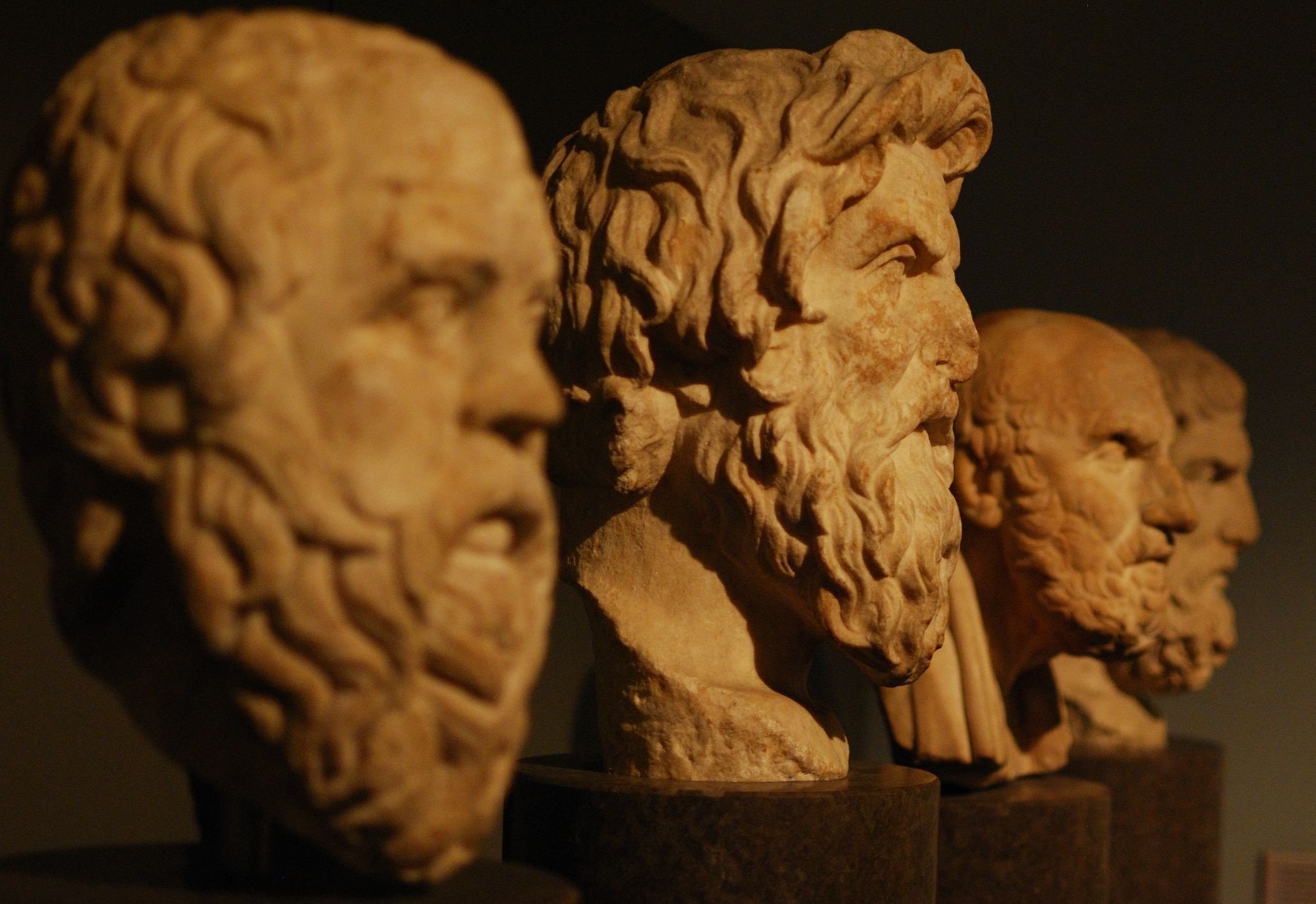 In The Clouds, Aristophanes is clear that the values young Athenians embrace will shape the leaders, thinkers, and citizens of the city. Photo: Morhamedufmg/Pixabay.

In Aristophanes’ play The Clouds, two characters, Just Speech and Unjust Speech, stage a debate over the meaning of justice. Just Speech insists that a life guided by education, respect, and civic duty creates stronger citizens. Unjust Speech ridicules these values, denies justice itself exists, and cleverly spins logic to suit his own ends.
This comic exchange, written in 423 BCE, may seem far removed from the challenges of Canadian democracy. Yet its themes feel strikingly familiar. Aristophanes anticipated today’s struggle between fact-based reasoning and post-truth rhetoric, between civic responsibility and self-interest. The questions he raises, such as what is justice, what is education for, and whether cleverness can replace morality, remain urgent almost 2,500 years later.
Education vs. Distraction
Just Speech defends education as essential for shaping citizens. He argues that it does more than prepare people to fight wars or follow laws. Education is what cultivates respect for parents, elders, and society at large. It is the foundation of civic virtue. Unjust Speech scoffs at this. He claims education is unnecessary and even harmful, luring people toward the marketplace and bathhouses, places of distraction. To him, cleverness and manipulation matter more than character.
Today, Canadians face a similar question. Do our schools and universities exist to build informed citizens, or simply to train workers? Rising tuition fees, the shrinking of liberal arts programs, and declining trust in institutions echo Aristophanes’ warning. When education is devalued, democracy weakens.
Denying Justice
The most chilling moment comes when Unjust Speech flatly declares, “I quite deny that Justice even exists.” His logic is clever. If the gods themselves, like Zeus, broke rules, then why should humans be bound by them? By undermining the very concept of justice, he clears the way for a worldview built on power and expedience.
This denial of justice echoes patterns in Canadian politics today. Misinformation spreads online with ease, while populist rhetoric questions the value of institutions. Whether it is conspiracy theories eroding public trust, or politicians dismissing independent bodies as biased, the result is the same: weaken the idea of justice, and society becomes vulnerable to manipulation.
Human Nature and Moderation
Another part of the debate explores assumptions about human nature. Just Speech associates discipline and self-restraint with moral strength. He warns against indulgence in places like the marketplace and baths, where Athenians waste time in gossip rather than pursuing knowledge. For him, justice means rising above base pleasures to build a life of respect and order.
Unjust Speech, however, leans into indulgence. He claims that pleasures such as laughter, food, drink, affairs, and entertainment are natural, and that to deny them is to deny human nature. His argument is not only clever but also tempting: why choose restraint when you could choose pleasure? He reframes moderation as weakness, arguing that those who live “justly” will be mocked and disrespected.
This tension is also alive in Canadian society. Our civic life is shaped by similar questions: Should we prioritise long-term investment in education, civic engagement, and public health, or should politics cater to quick wins, short-term pleasures, and rhetorical victories? Social media often rewards the latter, rewarding snappy rebuttals and insults over thoughtful engagement. Unjust Speech would thrive on X.
Justice and Leadership
Both Just and Unjust Speech also reveal how personal morals scale up to political consequences. Aristophanes makes it clear that the values young Athenians embrace will shape the leaders, thinkers, and citizens of the city. If the next generation is raised on respect, knowledge, and civic duty, Athens will be guided by those principles. If instead they are raised on indulgence, cynicism, and rhetorical trickery, the city will inherit leaders who embody those same traits.
This lesson is just as relevant in Canada today. Our debates over civic education, misinformation, and the tone of political leadership ultimately point to the same truth: the health of democracy depends on the moral compass of its citizens. Leaders do not emerge in a vacuum. They reflect the culture that produces them.
Why It Matters for Canada
Aristophanes’ comic debate is, in reality, a warning. A society that follows the path of Unjust Speech may win quick victories through clever rhetoric, but it risks producing leaders and citizens untethered from responsibility. In contrast, Just Speech’s vision, rooted in knowledge, respect, and civic purpose, may seem old-fashioned, but it provides the foundation for sustainable and just governance.
Canada is not immune to these tensions. As misinformation spreads faster than truth, as debates about education and civic literacy intensify, and as politics increasingly rewards soundbites over substance, The Clouds feels eerily contemporary. Aristophanes reminds us that the health of democracy depends not only on clever arguments, but on a shared belief that justice is real, and that it is worth defending.
The choice between Just and Unjust Speech is not only a literary debate. It is a choice every democracy must face, again and again. For Canada, the lesson is clear: education matters, justice matters, and the way we argue about them shapes the society we build.
—
Reference:
Aristophanes. The Clouds. Translated by Thomas G. West and Grace Starry
West, in Four Texts on Socrates, Cornell University Press, 1998. Available
at: Cornell University Press
