

War Without an Exit: Washington’s Trial-and-Error Strategy in the War on Iran
After five months of escalation, Washington is still searching for an exit from a war whose aims were never clearly defined.
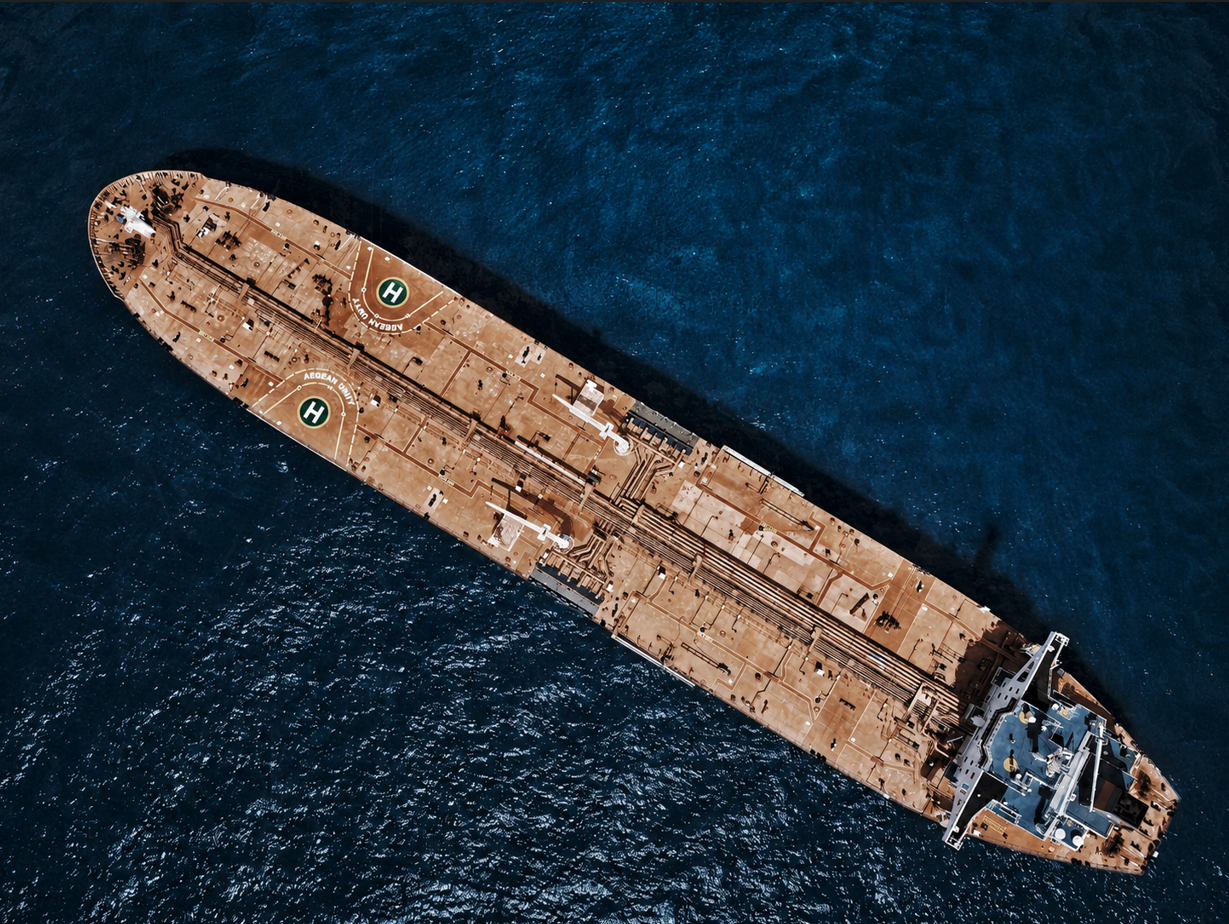 An oil tanker travels through open waters. Iran’s control of the Strait of Hormuz has become its principal source of leverage, leaving Washington without a clear path out of the conflict.

At the outset of the U.S.-Israeli war on Iran, President Donald Trump declared that military operations would continue until all American objectives had been achieved, and initially expected the campaign to last four to six weeks. Yet after 39 days of continuous bombardment to Iran, Trump abruptly suspended the air campaign and declared a ceasefire. That pause initiated a diplomatic process that, more than two months later, produced the June 17 Memorandum of Understanding (MOU), signed by Trump and Iranian President Masoud Pezeshkian. The MOU served as a roadmap for ending the war, reopening the Strait, and addressing the principal demands of both sides.
Approximately three weeks later, the United States resumed striking Iran following attacks on commercial vessels in the Strait of Hormuz. The incidents occurred amid a dispute over a shipping corridor opened by Oman closer to its coast, which Iran opposed.
Trump is again threatening to intensify the campaign, saying that the United States will strike Iran “very hard” until it can no longer withstand the pressure. This recurring cycle—escalation, declarations of victory, pauses for negotiations, renewed bombing, and threats of still greater force—raises a fundamental question: Does the Trump administration have a coherent strategy to end the war?
So far, the United States appears to have relied on a trial-and-error strategy. It entered the war without clearly defined and attainable political objectives, failed to account for how Iran’s control of the Strait of Hormuz would obstruct an American exit, and repeatedly returned to military escalation in the belief that greater coercive pressure would produce different results. It is time for the Trump administration to acknowledge that the war on Iran has failed to achieve its principal stated objectives and to implement the MOU as a path toward ending the conflict.
The War’s Undefined Goals
The U.S.-Israeli war against Iran, launched on February 28, 2026, was publicly justified as an operation to eliminate the military threats posed by the Iranian government. From its opening hours, however, the campaign lacked clear and precise objectives. Its declared purposes ranged from eliminating an imminent threat and destroying Iran’s military capabilities to compelling Tehran to accept a new nuclear agreement. However, statements by President Donald Trump and Israeli Prime Minister Benjamin Netanyahu suggested that regime change was the main objective of the war.
In his February 28 address announcing major combat operations, Trump justified the war as necessary to eliminate an imminent Iranian threat to the United States, its forces, bases, and allies, but did not clearly explain what made the threat imminent or how the military campaign would eliminate it. He also claimed that Iran’s nuclear facilities at Fordo, Natanz, and Isfahan had already been destroyed while presenting a new agreement renouncing Iran’s nuclear ambitions as one of the war’s objectives. The campaign’s other goals—destroying Iran’s missile capabilities and industry, annihilating its navy, and neutralizing its regional proxies—were similarly expansive and offered no clear standard by which victory could be measured. Trump concluded by encouraging the Iranian people to seize control of the state once the bombing ended: “When we are finished bombing, it will be yours to take. This will probably be your only chance for generations.”
Netanyahu was more explicit in presenting the overthrow of the Iranian regime as a central objective of the war. Announcing to the Israeli public that his government had launched Operation Fury jointly with the United States, he declared: “Our joint action will create the conditions for the brave Iranian people to take their destiny into their own hands.”
Although Trump and Netanyahu did not formally declare regime change to be the war’s principal objective, their appeals to the Iranian people, combined with the ambiguity surrounding the campaign’s stated goals, suggest that overthrowing the Iranian government was in fact its central aim.
The conduct of the war further supports this interpretation. Israel claimed that the opening U.S.-Israeli strikes killed approximately 40 senior Iranian commanders and officials in less than a minute, including Supreme Leader Ali Khamenei and several senior military and security officials. These coordinated leadership strikes, combined with Trump’s and Netanyahu’s appeals for Iranians to seize control of the country, suggest that the campaign aimed not only to weaken Iran’s military capabilities but also to create a leadership vacuum and the conditions for regime collapse.
The failure to overthrow the Iranian regime during the 39-day air campaign, combined with Iran’s formal declaration on March 2, 2026, that the Strait of Hormuz was closed, left Washington without a credible exit strategy.
Trump’s preferred exit was to declare victory, end the air campaign, and rely on economic pressure in the expectation that the weakened regime might eventually collapse. By the end of March, he was already saying that the United States would leave Iran “very soon.” He claimed that regime change had effectively occurred because the country’s previous leaders had been killed and Washington was now dealing with a “much more reasonable” and “much more rational” group.
Such a declaration of victory could be supported by Trump’s repeated claims about the extent of the destruction inflicted on Iran. The administration asserted that Iran’s navy had been “obliterated,” that more than 85 percent of its defence-industrial base had been destroyed, and that most of its ballistic missiles, launcher vehicles, and long-range attack drones had been eliminated.
This exit, however, was not available to Washington. Iran continued to enforce its restrictions on passage through the Strait of Hormuz, with far-reaching consequences for regional energy exports, global oil and gas prices, and inflation. Iran also retained sufficient missile and drone capabilities to strike U.S. bases and other American interests across the region. Nor was Iran willing simply to accept a temporary suspension of hostilities. Tehran rejected an immediate ceasefire that would have required it to reopen the strait before negotiations began, demanding a lasting settlement instead. Iran’s control of Hormuz therefore prevented Trump from declaring victory and withdrawing while leaving the sanctions regime and the broader political conflict unresolved.
This pattern of escalation and retreat continued after the initial campaign, as suspensions of U.S. strikes were repeatedly announced, only for operations to resume when talks stalled.
The MOU Exit Strategy That Failed
The apparent breakthrough in Washington’s search for an exit came on June 17, 2026, when the United States and Iran signed the MOU with the assistance of Pakistan and Qatar. The MOU authorized the resumption of Iranian oil exports, made Iran’s frozen funds available, ended hostilities on all fronts including Lebanon, and included a reconstruction plan worth at least $300 billion. In return, Iran would ensure safe passage through the Strait within 30 days, negotiate future arrangements with regional states, and reaffirm it would not acquire nuclear weapons, with remaining nuclear issues settled within 60 days. Under Article 13, nuclear negotiations on the remaining issues could begin only once this sequence had been completed.
For Iran, the MOU represented a substantial political victory: most of its nuclear commitments were not new, since Tehran had already been negotiating its nuclear programme with the United States in Geneva when the war began. For the United States, the MOU offered a potential exit while preserving economic leverage, since broader sanctions relief remained dependent on a final agreement. Washington’s central objective was therefore to prevent Tehran from using unilateral control over the Strait as an instrument of coercion during the nuclear negotiations.
Washington’s effort to deprive Iran of its most important bargaining card—control over passage through the Strait—had begun even before the MOU was signed. On May 27, President Trump threatened to “blow up” Oman if it participated in arrangements recognizing Iran’s proposed rules for maritime passage. Following further American diplomatic pressure, Oman established a southern corridor in its territorial waters through which vessels could transit without Iranian authorization.
The corridor dispute reinforced Tehran’s perception that Washington did not intend to implement the MOU. Three weeks after the memorandum was signed, none of Iran’s frozen funds had been released, and Washington was pursuing a separate Israel–Lebanon framework even though the MOU had folded Lebanon into the broader settlement. Tehran viewed this as an attempt to strip away another component of its negotiating leverage.
Tehran consequently declared the Omani corridor a violation of the MOU and began targeting or turning back vessels attempting to use routes it had not authorized. The United States responded by resuming attacks on Iranian territory, declaring the MOU over, reinstating its naval blockade, and threatening a broader and more sustained bombing campaign against Iran’s military capabilities and national infrastructure, including bridges, power plants, and energy facilities.
In short, the MOU failed because the United States sought to strip Iran of its most important source of leverage during the war—control over the Strait—before a final agreement on sanctions relief and Iran’s nuclear programme had been concluded.
Renewed Escalation, the Same Strategic Impasse
Recent developments suggest that Washington is preparing for another major escalation. The deployment of dozens of aerial-refuelling aircraft to Israel, along with reports of planned U.S.-Israeli attacks on Iranian energy infrastructure, indicated a broader bombing campaign was under consideration. On August 2, Trump said American forces had been prepared to launch what he called “the biggest attack since World War II,” though he cancelled it a day earlier after appeals from Saudi Arabia, Qatar, and the UAE.
At the same time, the administration’s demands remained maximalist. Trump insisted that any agreement require the immediate and complete reopening of the Strait of Hormuz and the removal of Iran’s nuclear threat. After Tehran denied that negotiations were underway, he declared that nothing would be permitted through the Strait unless Iran accepted an agreement or offered “total surrender.”
Perceiving the war as existential, Tehran is unlikely to accept such terms. Iranian officials increasingly regard control over the Strait not as a bargaining chip but as a strategic asset in negotiations with the United States.
Without sanctions relief, access to frozen funds, and a funded reconstruction programme, the government faces the possibility of worsening economic hardship and renewed domestic unrest. Relinquishing control over the Strait before obtaining those benefits would leave Washington free to maintain or intensify economic pressure if Tehran rejected American demands concerning uranium enrichment, ballistic missiles, or its regional allies.
Iran and its regional allies have therefore threatened horizontal escalation rather than capitulation. Iran’s joint military command warned that attacks on its infrastructure would be met with retaliation against regional oil, gas, and electricity facilities, threatening to halt oil exports entirely. Iran-aligned groups in Iraq were accused of attacking Saudi oil facilities, prompting coordinated U.S.–Saudi strikes in response. The Houthis separately declared a maritime blockade against Saudi Arabia, threatening its principal alternative export route while Hormuz remained disrupted. Together, these actions show that renewed escalation is not a path toward victory but the reproduction of the same strategic impasse.
Conclusion
Five months after the war began, Washington has no coherent exit strategy: it has neither overthrown the Iranian regime nor forced its capitulation. Iran retains significant drone and missile capabilities, as demonstrated by its continuing attacks on U.S. bases and interests across the region. More importantly, Washington’s immediate objective has shifted from compelling Iranian surrender to reopening the Strait of Hormuz—a waterway that was open before the war began. Faced with what it regarded as an existential threat, Tehran closed the Strait, expanded the conflict across the region, and targeted American interests, preventing Washington from declaring victory and withdrawing.
Further military coercion is unlikely to achieve Washington’s original objectives or reopen the Strait. The past several months have demonstrated Iran’s willingness to answer escalation with escalation by broadening both the geographical scope of the war and the range of potential targets, including Gulf energy infrastructure and maritime passage through Bab el-Mandeb.
The path out of this impasse is a return to the MOU, which offered Washington a viable exit strategy. This time, however, the United States would have to implement its reciprocal and sequenced provisions. Washington may fear that doing so would reduce its leverage in negotiations over Iran’s nuclear programme, but broader sanctions relief would remain dependent on a final agreement. Iran’s objectives—sanctions relief, reconstruction assistance, and access to its frozen funds—would therefore continue to provide Washington with considerable leverage in pursuit of what should be its central objective: a nuclear agreement.
Absent such an approach, Washington will continue its trial-and-error strategy in the hope that it can first strip Iran of its principal bargaining instrument—control over the Strait—and then force it to capitulate. But this is not a strategy. It is wishful thinking.
