

Museum Diplomacy in the Age of Rupture
As the rules-based order breaks down, business as usual is no longer an option.
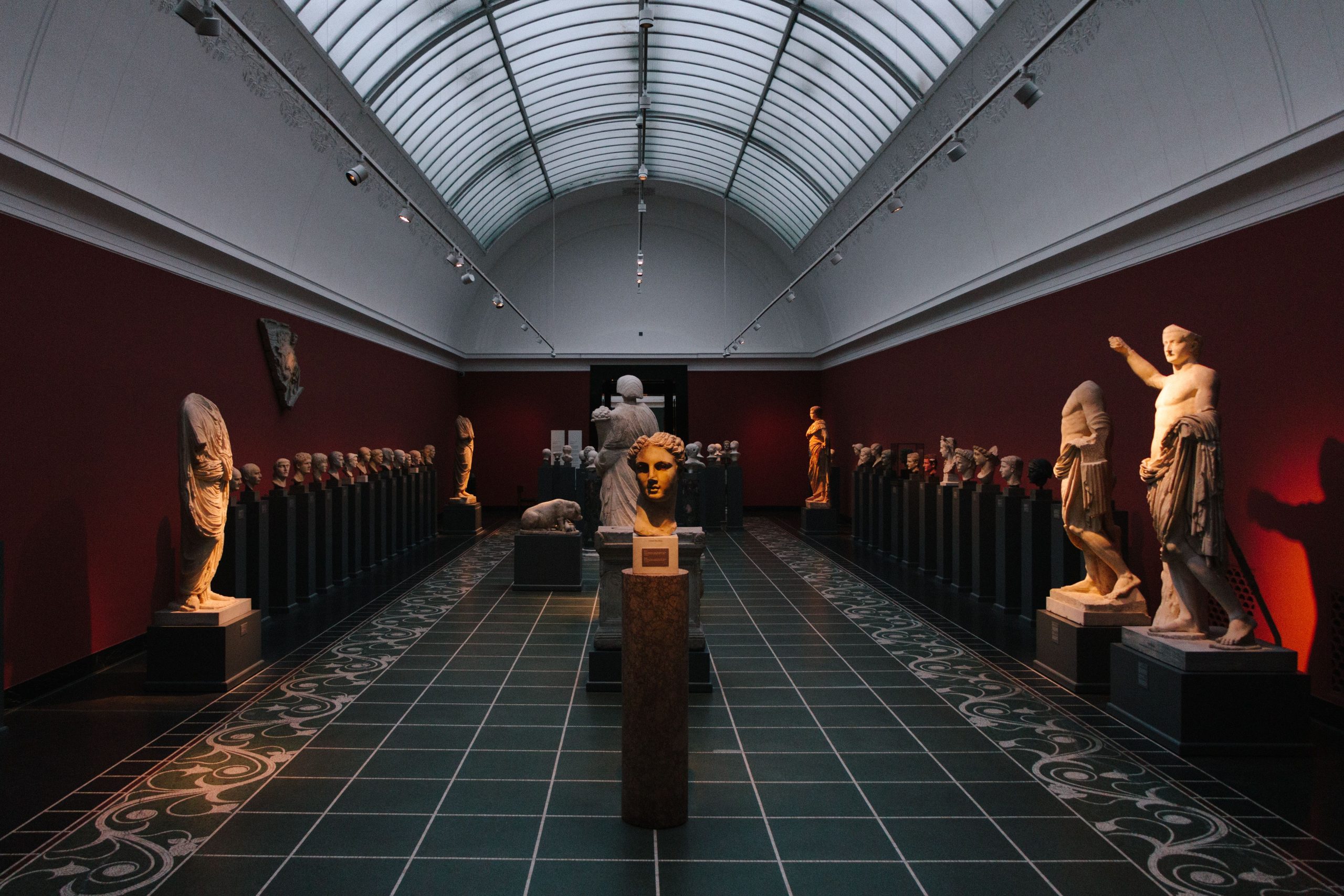 Museums are becoming increasingly important spaces for diplomacy, dialogue and connection in a fractured world.

Museums must respond to the momentous geopolitical shifts playing out today. Nothing has been more indicative of these shifts as on 2 April 2025, when United States President Donald Trump announced massive, unprecedented tariffs that included everybody from friends to adversaries. These tariffs were intended to “liberate” the US by creating freedom from foreign dependencies, such as imports, protect and rebuild American industry, and create a fairer trade system for the US. Together, in Trump’s view, this was supposed to achieve “liberation” from a system that he perceives as having unfairly treated the US. While liberation usually refers to achieving freedom from military occupation or the end of oppression, the moment certainly heralded that the world is changing. With the US turning its back on the international trade system that it had helped build and sustain for decades, analysts were noting that these changes marked a decisive departure from the post-World War II and the post-Cold War world order. Upending the trade system is the symptom of a broader transformation.
More than one year after “Liberation Day,” these changes are affecting how museums should engage globally by way of their own museum diplomacy, and how it should evolve in response to a shifting global order. With the geopolitical context that has underpinned museum work fundamentally changing, business as usual approaches need to be rethought and adapted if not radically overhauled for the new age that we are finding ourselves in collectively. I argue for a more assertive, institution‑driven model for museum diplomacy, one that is globally literate, locally grounded, and sufficiently agile to meet emerging global challenges and to infuse collaborations with renewed purpose.
Rupture
As stated above, the developments affecting the trade system are not happening in isolation. They are part of a broader pattern of change. From the perspective of the US, which, over the past year has been seen as the main instigator of these changes, these also include the US’s withdrawal from international institutions and agreements, the scaling back of international aid and public diplomacy efforts, challenges to alliances, and the weakening and ignoring of international law. In his much-regarded speech at the World Economic Forum in Davos in January 2026, Canadian prime minister Mark Carney spoke of a “rupture”, the end of the world order as we know it. Such comments were echoed by other leaders, such as German federal chancellor Friedrich Merz, who, at the Munich Security Conference a month later, claimed that the established order “no longer exists”. The entire conference stood under the motto “under destruction”.
These somber assessments should be tempered by the clarification that the American-led world order had long its winners and losers and had certainly not benefitted everybody equally. While it has been based on free trade, multilateralism, alliances and rules-based cooperation, it certainly served and was upheld by the US as the post-Cold War hegemon, and thereby often, as Patrick Porter has argued, rightly been seen as an imposition by the West. While events are still unfolding, the moment that we have entered may be akin to the “GZERO world” that Ian Bremmer predicted over a decade ago. In such a world, no one country is taking up the mantle of global leadership. The result is the weakening of global cooperation and an increase in instability.
Why It Matters for Museums
Museums, whether they are globally active or not, operate within geopolitical structures, even when we’re not very conscious or attuned to these structures, or perceive they do not operate in them or are affected by them. The system in which institutional work has unfolded since the early 1990s can reinforce this illusion. Mobility between places was relatively fluid and experienced little friction, free trade made possible the movement of objects, people and money, and cultural diplomacy existed within a growth of public diplomacy and soft power as concepts and policies expanded worldwide.
Indeed, this was the age of soft power, a term initially coined by the late Joseph Nye Jr., to complement military and economic coercion, with an understanding of power that worked through generating attraction and influence. This was coupled with an ever more networked world through the rise of the internet. These conditions that have framed institutional practices for decades can no longer be taken for granted. It could even be argued that some of the conditions were not particularly helpful to cultural institutions as the spread of marketisation and financialisation, usually framed as globalisation and neoliberalism, created a culture that has been and still is predominantly seen as an industry rather than appreciated for the infrastructural value it actually has, as argued by Justin O’Connor.
If the operating conditions are shifting, then these changes may introduce (geopolitical) risks for institutional practices. Conflicts, such as the US/Israel war with Iran in early 2026, can introduce price hikes and other potential long-lasting consequences that are certainly already felt by those trying to ship museum objects. Sanctions and tariff regimes and other geoeconomic measures might restrict abilities to collaborate and limit an openness of the world that has been conducive to global museum work. Crossing borders might also become more cumbersome. Obtaining visas is already a mounting challenge for some, and one could picture frictions when it comes to logistics of shipments and securing insurance protection. It may also become more difficult to work with certain partners depending on where they are located. Some international relationships, even long-standing, productive ones, might come under new scrutiny. While classic cultural diplomacy has long been a component of foreign policy, will direct and unambiguous ideological alignment become a requirement in some places?
These are key risks that may not yet apply broadly but now is the time to work through them and ask ourselves how these might affect us even if, initially, only hypothetically. How is museum diplomacy supposed to function when the system on the back of which it was built is changing? How can we exist in a world in which the foreign policy instrument wielded by some is that of force and coercion? A world in which military budgets are being strengthened and budgets for culture continue to atrophy.
As museums, as a sector, we need to come to a set of realisations. We need to understand that the world is indeed evolving to a yet unknown destination and that there is no going back. As Carney said in Davos: “nostalgia is not a strategy”. We should keep an open mind about the world, and not cling to past assumptions. Uncertainty and volatility are, as Mark Leonard has written, the new, quite unsettling normal. That means the ways of operating that we have come accustomed to need to be rethought and retooled. What worked in the past may no longer work going forward.
A Framework for Museum Agency
This brings us to the notion of the agency of museums thatwe need to recognise and to grasp. Conventionally understood, cultural diplomacy is the purview of the state that extends its foreign policy through the means of culture. Yet diplomacy happens everywhere. It has long been recognised that diplomacy is no longer confined to the club of the nation state. It also happens through networks. As Anne-Marie Slaughter puts it, we are moving from the chessboard to the web. And that means acknowledging, embracing and enabling the role of actors other than the states and their role in global affairs. These are cities, universities, cultural organisations, Indigenous communities, and protest movements. It includes the movements on the new right, and also transnational criminal organisations. And it also includes museums, as I’ve explored elsewhere.
Building on a previous call to develop a robust, institution-driven museum diplomacy, much of which I’ve discussed elsewhere with Sarah E.K. Smith, I offer additional insights that specifically respond to the “rupture” that museums, wherever they are, should respond to. Museums, no matter where in proximity to the state they are, need to think through how the challenges discussed here could be affecting them. What follows provides an initial framing device within which to consider and reconsider a museum’s global engagement, and a set of possible steps to help navigate our times.
The first step is to ramp up efforts in global literacy. Understanding what is happening around our institutions and understanding why it is happening is a necessary step to come to terms with it and forge a path forward. That means not leaving global and foreign affairs as an afterthought but actively pursuing this knowledge. This posture does not only require being on top of the news but also understanding the broader conditions, contexts and trends in which current affairs reside. That does not require immediate institutional responsiveness. Museums do not need to comment on everything. But we need to have a strong sense of awareness and understanding of the world, beyond rudimentary knowledge, hence the call for literacy to adapt to the increased global volatility.
A second element that flows from global literacy is an understanding and embracing of the challenges the world is by and large facing collectively, even if collective action is indeed wanting. These challenges unsurprisingly include climate change, inequality, health crises, and technological risks. The list is much longer and may include different priorities in different parts of the world. Key is that their resolution by a single jurisdiction is not possible as global challenges are indeed global, interconnected and systemic. That is why by “embracing” them I propose a more vigorous footprint of these issues in museum programming. In this respect, ongoing efforts by museums to, for example, address climate change have been a welcome development.
And this comes together with another principle for museum work. Local-global thinking. As Darian-Smith and McCarthy explained in The Global Turn, global issues have local manifestations and vice versa. Global thinking helps us deprioritise our customary lens of the “national” and should empower museums to place their work in a planetary context. This approach should be particularly useful to institutions who might not see what the relevance of addressing global challenges is to them. Local-global thinking helps to figure this out proactively and productively.
Related to this is our next step, which Slaughter calls “network thinking.” The first three steps can easily happen at an institutional level, if not even an individual level by museum workers. They can change one’s frame of mind and can also change our museological practice. Network thinking and acting in networks helps to connect this work to other institutions. In addition to the many things that museums are already somewhat customarily doing internationally, actively pursuing networked engagement can take their work much further. Getting active in global museum associations, like the International Council of Museums, which currently features climate change and decolonisation in its strategic plan, can be generative to that effect.
The last step is encouraging museums to establish their own global agenda and articulate their purpose for global engagement. Charting your own institutional agenda helps to think through your own practices, audiences and priorities. It also empowers an institution to grasp the agency that it already has and amplify it productively. In this moment of transformation that should feel empowering.
Conclusion
This piece offers a brief diagnostic of the pivotal global changes that will be affecting museum work. Museums have previously lived through and experienced moments of global crisis. The COVID-19 pandemic is of course the more recent and one of the most consequential cases in point, given that its effects are still felt across institutions. However, the current moment, which is precipitating a shift in the global order as it has been in place since the Cold War, will require a different form of introspection. While we may not yet see all the consequences and potential (geopolitical) risks that could affect global museum work while also manifesting locally, now is the time to do the intellectual heavy lifting to think this through and to harness the agency museums hold. Being proactive and finding new energy is not simply to adapt but to move forward strategically. This piece offers a call for museums to start coming to terms with the current situation and to embark on a bold research and practice agenda to address it.
This article is adapted from my keynote address at the ICOM UK Annual Conference, “Museum Diplomacy in Action,” held at the University of Oxford on April 16–17, 2026. I thank ICOM UK for the opportunity to co-curate the conference and deliver the keynote.
Editor’s Note: This article is published ahead of New Coalitions for a New World, the opening panel at CIC Couchiching 2026, where author Sascha Priewe will be among the speakers. Join the conversation on October 7 at the Aga Khan Museum as leading voices examine the partnerships Canada needs in a more fragmented world.
This article is adapted from my keynote address at the ICOM UK Annual Conference, “Museum Diplomacy in Action,” held at the University of Oxford on April 16–17, 2026. I thank ICOM UK for the opportunity to co-curate the conference and deliver the keynote.
