

Canada’s Economic Future Depends on Turning Energy Strength into Strategic Advantage
Energy sovereignty can strengthen Canada’s economic resilience and diplomatic influence, but lasting leadership requires strategic investment, credible partnerships, and a just transition that delivers opportunities for Canadians.
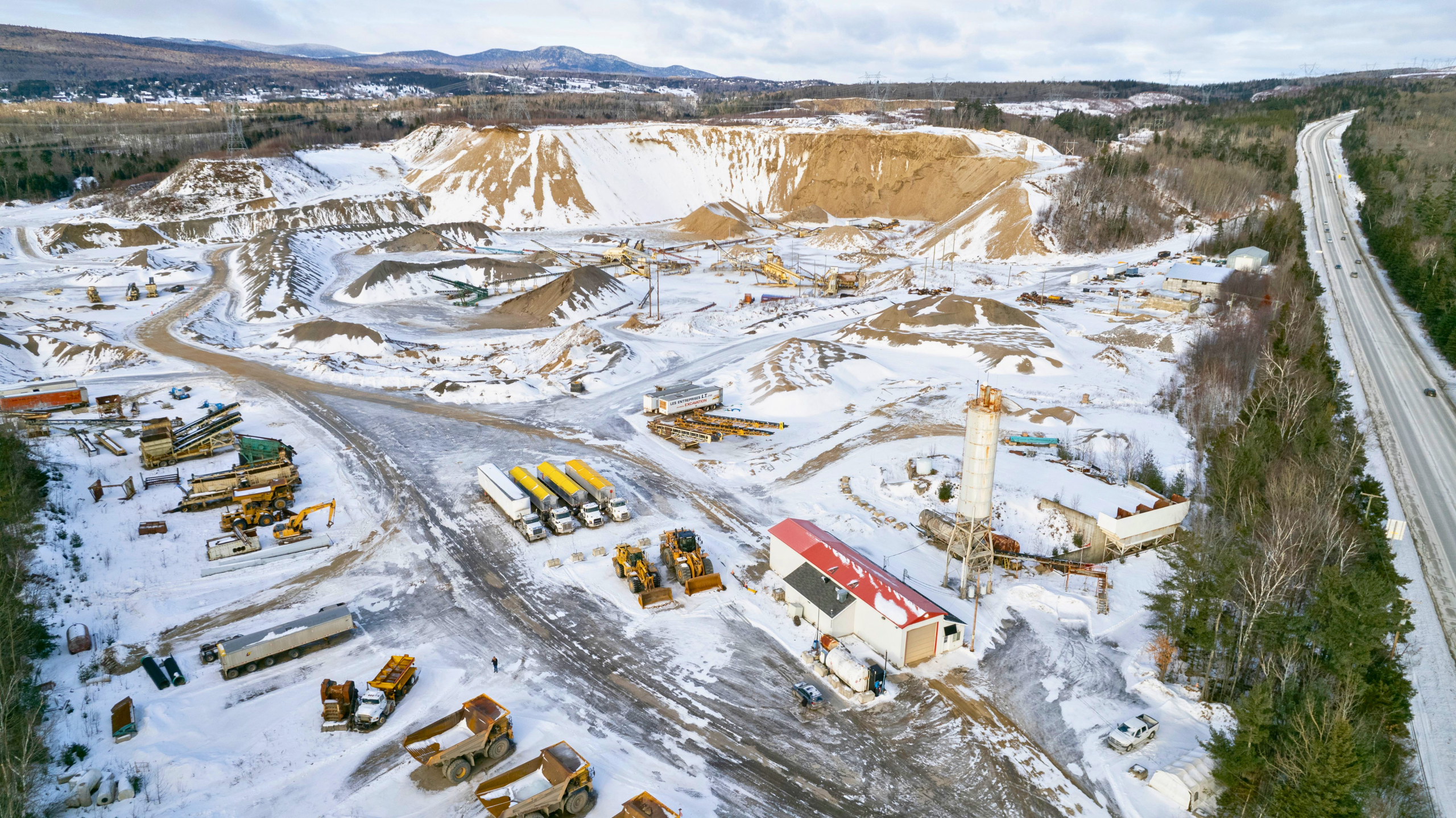 Drone shot of a snow-covered quarry and industrial site in Quebec, Canada.

Canada is an energy powerhouse. But does that automatically make it an energy power?
In 2025, Canada supplied 81.3 percent of electricity imported by the United States. This illustrates the depth of cross-border energy integration. Yet resource abundance and export capacity alone do not guarantee economic resilience, diplomatic influence, or long-term competitiveness. As geopolitical uncertainty, trade tensions, and climate risks reshape international relationships, Canada faces a strategic question: how can it turn its energy strengths into lasting economic and diplomatic advantages?
This question resonated with me at the Canadian International Council’s 2026 Couchiching Conference. I attended as a Toronto Metropolitan University student delegate and rapporteur for Panel 3, “Competing for Canada’s Economic Future.” My central takeaway was clear: Canada’s future competitiveness depends on transforming its energy strengths into strategic partnerships, economic resilience, and lasting global influence.
Here, energy sovereignty should not mean isolation or complete self-sufficiency. It means having the infrastructure, institutional capacity, partnerships, and skilled workforce needed to make strategic decisions while maintaining reliable and affordable supplies. Canada’s relationship with the United States remains economically essential. However, excessive dependence on any single market can create vulnerabilities and uncertainties when trade policies or geopolitical priorities shift. Diversification should therefore complement, not replace, established partnerships.
Canada’s expanding cooperation with international partners, including European initiatives involving critical raw materials and industrial policy, offers opportunities to strengthen supply-chain resilience and deepen economic diplomacy. But agreements alone do not create strategic advantages. Their value depends on implementation, reciprocal benefits, and Canada’s ability to develop and expand domestic capabilities. A credible international strategy must connect diplomatic relationships with investment, innovation, infrastructure, skills and workforce development at home.
From Resource Abundance to Strategic Advantage
Canada possesses significant advantages in critical minerals, hydroelectricity, nuclear technology and renewable energy resources. Canada is the world’s largest producer of potash, the second-largest producer of uranium, and ranks among the top five global producers of eleven critical minerals. Canada’s broader minerals and metals sector contributed approximately $156 billion to GDP and supported 724,000 jobs in 2024. Within this broader sector, critical minerals represent a strategically important segment, with an estimated $26.3 billion GDP contribution and approximately 57,500 jobs. However, Canada’s strategic opportunity lies in transforming these strengths into lasting economic value, industrial capacity, and national resilience.
The Canadian Critical Minerals Strategy emphasizes resilient supply chains and domestic value creation. In March 2026, the federal government announced 30 critical-minerals partnerships across twelve allied countries, associated with approximately $12.1 billion in prospective project capital. These commitments signal ambition, but investment announcements must translate into operational projects, responsible development, and measurable economic outcomes. That distinction matters because announced capital rarely becomes built capacity on schedule. A new mine typically takes ten to fifteen years to reach production in Canada, and the Canadian Climate Institute estimates the sector needs between $30 billion and $65 billion in new upstream investment through 2040 just to keep pace with projected demand—a gap that financing announcements alone do not close.
Amid geopolitical instability, trade tensions and increasingly fragmented supply chains, Canada cannot rely solely on resource exports or external processing capacity. Strengthening economic sovereignty requires targeted investment in three interconnected priorities: expanding domestic value chains through mineral processing, manufacturing and recycling to retain economic value and skilled employment. Next, diversifying low-carbon infrastructure by integrating nuclear, hydroelectricity, renewables and storage to strengthen reliability, affordability and energy security. Finally, pursuing regulatory efficiency while safeguarding environmental standards, Indigenous rights and community participation.
These priorities are not about retreating from global markets, but about building the domestic capabilities needed for stronger international partnerships. Ultimately, strategic competitiveness requires execution, not simply ambition.
Climate Responsibility Is Economic Security
Climate action is sometimes presented as competing with economic growth. That tension is playing out in real time around the Major Projects Office, established in 2025 to accelerate strategically important resource and infrastructure development. Its initial portfolio included liquefied natural gas (LNG), nuclear and mining projects, while the federal government’s approach to the oil and gas emissions cap has raised questions about the balance between industrial competitiveness and climate commitments. Critics, including Climate Action Network Canada and the David Suzuki Foundation, have expressed concerns that accelerated development could reinforce dependence on fossil fuels rather than support a longer-term clean-energy transition.
The Major Projects Office illustrates Canada’s efforts to accelerate strategically important infrastructure development. However, these investments must also align with Canada’s 2035 Nationally Determined Contribution (NDC) and its net-zero emissions commitment by 2050. The real measure of success will be whether these initiatives deliver timely, environmentally responsible investments that reduce emissions, strengthen economic resilience, respect Indigenous rights and create lasting community benefits.
Meanwhile, unmanaged climate risks can undermine infrastructure, productivity, public finances and investor confidence. Flooding, extreme heat, wildfires and disruptions to essential services demonstrate why climate resilience must be integrated into economic planning. The 2025 wildfire season burned more than 8.3 million hectares across Canada, making it the country’s second-worst wildfire season on record. Statistics Canada estimated that the fires put roughly a quarter of northern Manitoba’s and northern Saskatchewan’s regional GDP at risk, while approximately 21,000 Manitobans were forced to evacuate.
For Canada, responsible development requires rigorous Environmental Impact Assessments (EIAs), transparent governance, meaningful Indigenous participation and long-term risk management. Canada’s 2021 United Nations Declaration on the Rights of Indigenous Peoples Act requires federal efforts to align Canadian laws with the Declaration, including its principle of free, prior and informed consent (FPIC), a commitment that must inform efforts to accelerate major infrastructure development. These safeguards are not merely regulatory obligations; they help establish public trust, reduce uncertainty, and strengthen the legitimacy of major investments. Canada’s international credibility will increasingly depend on whether its domestic practices demonstrate the environmental responsibility it advocates abroad.
A Just Transition Must Create Accessible Opportunities
An ambitious transition will succeed only if Canadians can participate in and benefit from it. The federal Sustainable Jobs Act and 2026–2030 Sustainable Jobs Action Plan provide policy foundations for connecting economic transformation with employment and skills development.
But creating jobs is not enough. Opportunities must be accessible. Young Canadians, Indigenous communities, women, rural residents and historically underrepresented groups need practical pathways into emerging industries. This requires concrete policy and regulatory frameworks that integrate energy literacy, accessible training, transferable skills, and industry partnerships, ensuring equitable workforce transitions and sustainable livelihood opportunities for both emerging and established energy-sector workers.
Universities, colleges, employers and local governments can help bridge these gaps, but community participation must extend beyond consultation. Research from the University of Ottawa’s Positive Energy initiative highlights how public confidence in energy decisions is shaped by local circumstances, institutional trust, and meaningful opportunities to participate. Integrating community perspectives into strategic planning can strengthen the legitimacy of infrastructure development.
Success must therefore be measured beyond investment announcements and projected jobs, considering actual employment, workforce diversity, local procurement and lasting community benefits. Without meaningful participation and community capacity, national ambitions risk becoming disconnected from local realities.
Couchiching left me with one defining question: Will Canada continue to measure its potential by the resources it possesses, or its leadership by the results it delivers? The time to turn energy strength into lasting strategic advantage is now.
Editor’s Note: This article is part of our student delegate coverage of the Canadian International Council’s 2026 Couchiching Conference, reflecting on the panel “Competing for Canada’s Economic Future.”
Explore Topics
