

How to Defend Greenland and NATO
It’s time for NATO members to take more concrete actions against Trump’s threats, which if continued will inevitably lead to the invocation of NATO’s Article Four.
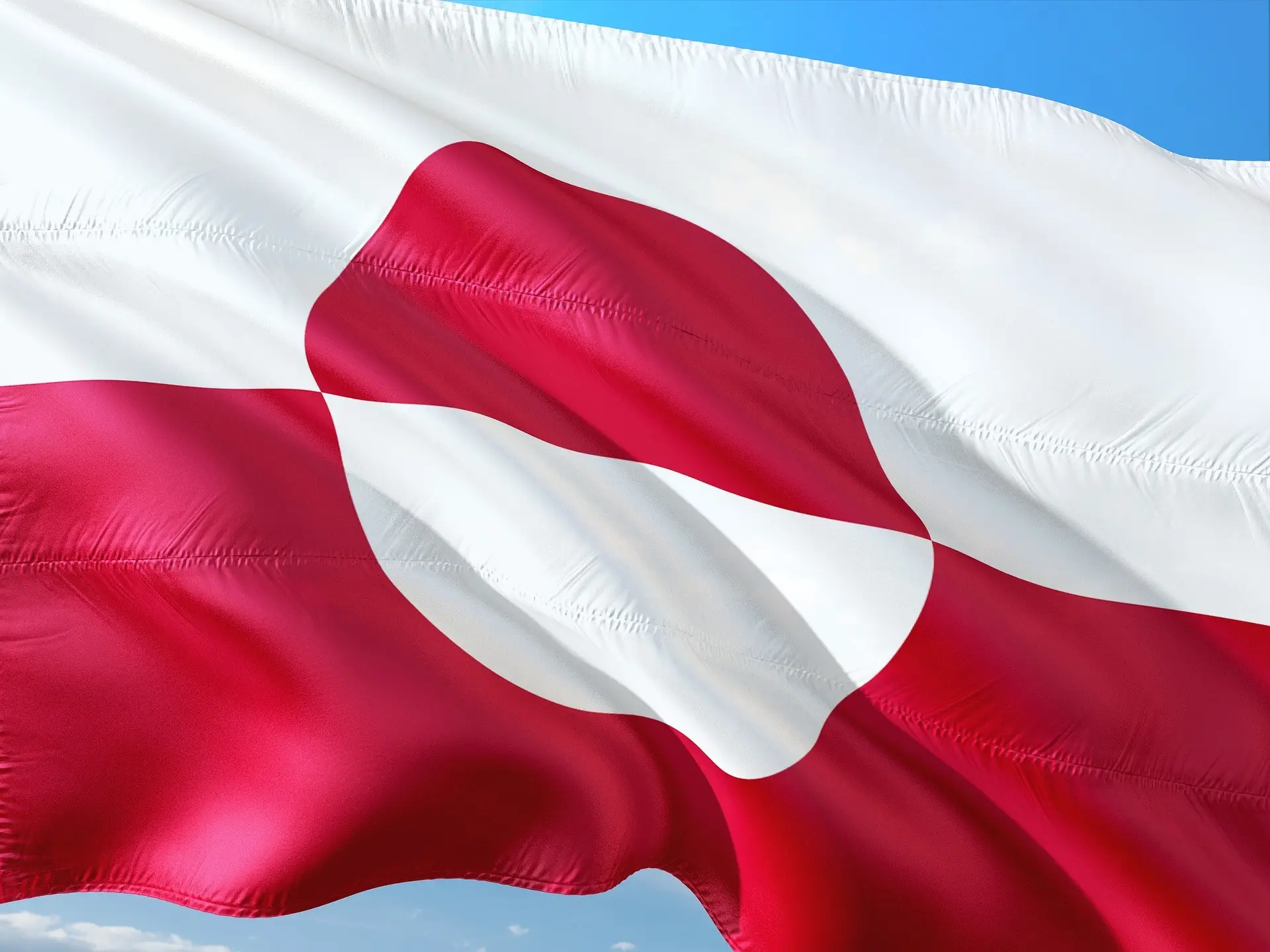 Greenland is a self-governing region within the Kingdom of Denmark. In 1721, Greenland became a Danish colony, in 1953 a Danish County, and in 1979, home rule was granted. Self-government was established in 2009. Photo: Jorono/Pixabay.

Donald Trump’s threats against Denmark to annex its self-governing territory Greenland have gradually escalated since his return to the White House, from musings about annexation, to a provocative visit by his Vice President, to the appointment of a special envoy with a mandate to bring Greenland into the United States, to refusing to rule out force. Last Friday he told reporters “we’re going to do something on Greenland, whether they like it or not.”
As a practical matter, it is probably less than even money that Trump will invade Greenland. Seizing this sizeable piece of territory would require a substantial force and it’s doubtful that a determined aggressor would telegraph his intentions over the course of a year. Moreover, as has been widely noted, the US already has a base on Greenland, Denmark is a NATO ally, and there’s no reason to doubt any genuine security needs would be readily met. More likely, he seeks to use the threat as leverage, perhaps for fewer limits on US access to valuable minerals, or regarding an unrelated issue. Yet Trump is erratic, impulsive, with a pathological compulsion to dominate, so attempted annexation is at least conceivable. Denmark’s Prime Minister has stated that any such attempt would mean the end of NATO “and thus the security that has been provided since the end of the Second World War.” Yet the threat itself is a grave threat to NATO, which may never be the same.
NATO has been a uniquely long-lived alliance, with a remarkable degree of military integration, in part because it addressed a common threat and solved shared problems. It has also rested on trust and reliability, and the hegemon’s respect for the interests and certainly the sovereignty of its allies. An unreliable and distrusted hegemon would soon see its allies balancing against it through arrangements with others, perhaps even seeking accommodation with a shared enemy as the lesser evil.
Trump’s dislike of NATO and view of allies as freeloaders rather than partners in a shared enterprise are also amply documented and go back to his earliest pronouncements on international affairs. He recently tweeted that “I DOUBT NATO WOULD BE THERE FOR US IF WE REALLY NEEDED THEM”, among other things an insult to the memory of the troops from NATO allies who died alongside their American comrades in Afghanistan, not least the Danes who suffered the highest per capita losses of any NATO member. To be sure, he has reaffirmed on occasion his acceptance of the obligation to come to the aid of an ally under attack, but the relevant Article in the North Atlantic Treaty leaves it to each member how to do so, and while Trump’s pledges of continued reliability may reassure a US public and politicians who would balk at renunciation, he cannot be relied upon to honour them and our common enemies know it.
NATO has never been without significant differences but members have generally tried to resolve them as discreetly as possible, usually though bilateral channels, to avoid open splits within alliance fora. The leaders of NATO allies have adopted a similar approach to Trump, flattering and humouring him, treating his more outlandish outbursts as perhaps entertaining distractions or intended for consumption by his domestic MAGA base, not to be taken seriously, confident that they could minimize the damage he might do until he was succeeded by responsible leaders. Not only has this gained only temporary changes in the atmosphere and rhetorical concessions from Trump, it has had serious drawbacks.
Treating Trump’s provocations as little more than amusement reinforces the perception both in the US and abroad, that, aside from his personal antics, he is within the bounds of political normality. It obscures the reality that threatening the sovereignty of an ally in an assertion of untrammeled dominance is not merely to stretch the limits of the post-1945 international order but to fundamentally challenge it. Moreover, dealing with Trump bilaterally is to meet him on his favoured ground, where the US will normally be the stronger of the two parties. Finally, seeing the current task as one of outlasting Trump rather than drastically reducing reliance on the US engenders learned helplessness and failure to take achievable steps towards that end.
Welcome, but only first, steps are the statements of solidarity with Denmark and Greenland issued last week by many European NATO allies and Prime Minister Carney. These should be followed by coordinated visits from all NATO country ambassadors in Washington to members of the Congressional committees on foreign affairs and defence as well as press conferences to state in measured, unthreatening, but emphatic tones that Trump’s threats in themselves pose a grave threat to NATO. US Ambassadors in all NATO capitals should be called in to hear the same message. It must be made clear, more in sorrow than in anger, that any discussions on Greenland’s security must take place with all parties respecting one another’s sovereignty, and that Trump’s aggressive rhetoric, certainly any aggressive action, damages political support for defence cooperation with the US through basing rights, intelligence sharing, and purchases of US weapons systems. NATO Secretary General Rutte and allied leaders should coordinate speeches to the same effect, and note that continued threats will inevitably lead to the invocation of NATO’s Article Four, for consultation when a member state faces threats of aggression, and any action the invocation of Article Five, for collective response to actual attack.
The obvious rejoinder is that allied dependence on the US makes this impossible, but while there are disparities in power, dependence runs both ways. A US without bases in allied countries would be curtailed in the global projection of its power, and without allies whose reliability was secured by mutual trust, it would be an isolated, weaker power.
Moreover, Trump is weaker than he was a few months ago. A lacklustre economy and his own overreach have put his approval ratings in freefall, and reversals in off-year elections are beginning to embolden previously supine Congressional Republicans to distance themselves from him as a political liability. Annexing Denmark may be a personal idee fixe with Trump but commands no significant constituency. Resistance from abroad can strengthen the hand of American lawmakers in restraining Trump. For all his braggadocio, Trump retreats when resisted, disguising it with bluster and spurious claims of victory.
To reduce its military dependence on the US, its allies must ramp up still further their defence spending. Their ability to withstand Russian aggression is underestimated, and Russia’s inability to defeat Ukraine has revealed the weakness of its conventional military. One pressing need is developing the enablers upon which allies remain dependent on the US, such as air defence, strategic airlift, and satellite intelligence. We must also further support Ukraine, which is holding the front line of what is best understood as a common fight. Canada, which shares a maritime border with Greenland, should also strengthen security ties with Denmark and accelerate progress on the necessary air and naval assets for Arctic defence.
While Trump is unique in his antipathy to NATO, there is a long-term, and bipartisan, shift away from Europe in US foreign and defence policy. This necessitates greater self-reliance on the part of NATO Europe as well as Canada. Shedding the illusions of Trump’s normality and reasonableness, and accelerating progress towards a defence posture less reliant on the US is the only way to avert a grave but still avoidable crisis and prepare for a changed geopolitical landscape.
